Table of Content
King George V of Hanover during the spring of 1866 was contacted by Austrian Emperor Franz Joseph about establishing a coalition against the Prussians, but his success took some time. The Hanoverian monarch concluded that his kingdom would fall if it were to fight against the Prussian armies. The Generals of the Prussian army realized that, in order to stay ahead of their Austrian enemies, they needed to explore new military tactics. They sent officers to travel across the Atlantic Ocean to go observe the American Civil War. These officers met with high ranking commanders and recorded both Union and Confederate tactics.
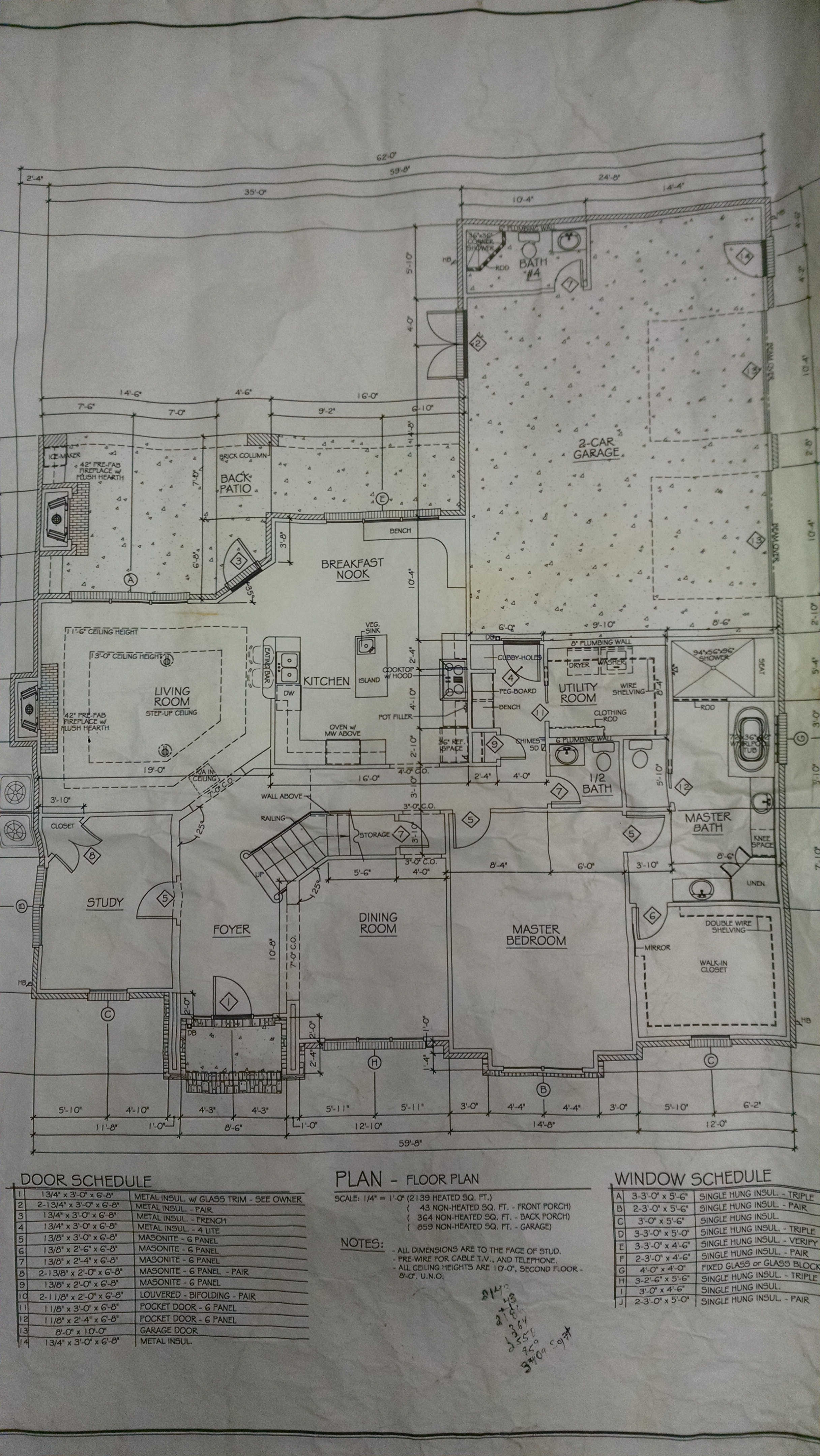
When considering complaint information, please take into account the company's size and volume of transactions, and understand that the nature of complaints and a firm's responses to them are often more important than the number of complaints. During which, I've complained about the front and back doors not being installed correctly. When it rains water gets in, they said the doors were to standard, they are not. The bricks on the outside of the building have sunken and cracked all around my almost 2k square foot home. They replaced 4 pallets of them a few years ago and said they will not change them again. I'm going to have to pay out of pocket for a structural engineer to inspect my home.
Thompson Preserve by Southern Homes
The Preserve is our newest community located just minutes from Barksdale Air Force Base. The Austrian artillery had breech-loading rifled guns which were superior to the Prussian muzzle-loading smooth bore cannon. New Krupp breech-loading cannons were being slowly introduced by the Prussians, but not in numbers large enough to influence outcomes.

The Preserve provides a network of walking trails alongside the neighborhood’s small lakes that weave together a system of green spaces and play areas. Currently under development, our new community will offer three different neighborhoods, each catering to the unique needs of today’s families. French Emperor Napoleon III, who expected a Prussian defeat, chose to remain out of the war to strengthen his negotiating position for territory along the Rhine, while the Russian Empire still bore a grudge against Austria from the Crimean War. The timing of the Prusso-Italian alliance of 8 April 1866 was perfect, because all other European powers were either bound by alliances that forbade them from entering the conflict, or had domestic problems that had priority. Britain had no stake economically or politically in war between Prussia and Austria.
Outbreak of war
; "German war of brothers") and by a variety of other names, was fought in 1866 between the Austrian Empire and the Kingdom of Prussia, with each also being aided by various allies within the German Confederation. Prussia had also allied with the Kingdom of Italy, linking this conflict to the Third Independence War of Italian unification. The Austro-Prussian War was part of the wider rivalry between Austria and Prussia, and resulted in Prussian dominance over the German states.
Possible evidence can be found in Bismarck's orchestration of the Austrian alliance during the Second Schleswig War against Denmark, which can be seen as his diplomatic "masterstroke". Taylor also believes that the alliance was a "test for Austria rather than a trap" and that the goal was not war with Austria, contradicting what Bismarck later gave in his memoirs as his main reason for establishing the alliance. It was in the Prussian interest to gain an alliance with Austria to defeat Denmark and settle the issue of the duchies of Schleswig and Holstein. The alliance can be regarded as an aid to Prussian expansion, rather than a provocation of war against Austria. Many historians believe that Bismarck was simply a Prussian expansionist, rather than a German nationalist, who sought the unification of Germany. It was at the Gastein Convention that the Austrian alliance was set up to lure Austria into war.
For the defeated parties and Schleswig-Holstein
The Prussian peace with Austria forced the Italian government to seek an armistice with Austria on 12 August. According to the Treaty of Vienna, signed on 12 October, Austria ceded Veneto to France, which, in turn, ceded it to Italy. Those that sided with Austria included the Kingdoms of Bavaria and Württemberg. Smaller middle states such as Baden, Hesse-Kassel (or Hesse-Cassel), Hesse-Darmstadt, and Nassau also joined with Austria. Many of the German princes allied with the Habsburgs principally out of a desire to keep their thrones.
Prussia's general mobilization orders were signed in steps on 3, 5, 7, 8, 10 and 12 May. The war erupted as a result of the dispute between Prussia and Austria over the administration of Schleswig-Holstein, which the two of them had conquered from Denmark and agreed to jointly occupy at the end of the Second Schleswig War in 1864. The crisis started on 26 January 1866, when Prussia protested the decision of the Austrian Governor of Holstein to permit the estates of the duchies to call up a united assembly, declaring the Austrian decision a breach of the principle of joint sovereignty. Austria replied on 7 February, asserting that its decision did not infringe on Prussia's rights in the duchies.
REALTOR // PARKS ( 790-7400 / 415 MAIN ST. FRANKLIN, TN 37064LICENSED IN THE STATE OF TENNESSEE - PARKS LICENSE #00059191
The ultimate aim of most German nationalists was the gathering of all Germans under one state, although most accepted that the German portions of Switzerland would remain in Switzerland. Two ideas of national unity eventually came to the fore – one including and one excluding Austria. When Austria brought the Schleswig-Holstein dispute before the German Diet on 1 June and also decided on 5 June to convene the Diet of Holstein on 11 June, Prussia declared that the Gastein Convention of 14 August 1865 had thereby been nullified and invaded Holstein on 9 June. When the German Diet responded by voting for a partial mobilization against Prussia on 14 June, Bismarck claimed that the German Confederation had ended. The Prussian Army invaded Hanover, Saxony and the Electorate of Hesse on 15 June. If you choose to do business with this business, please let the business know that you contacted BBB for a BBB Business Profile.
Superior Prussian organization and élan decided the battle against Austrian numerical superiority, and the victory was near total, with Austrian battle deaths nearly seven times the Prussian figure. In order to prevent "unnecessary bitterness of feeling or desire for revenge" and forestall intervention by France or Russia, Bismarck pushed King William I of Prussia to make peace with the Austrians rapidly, rather than continue the war in hopes of further gains. The Austrians accepted mediation from France's Napoleon III. The Peace of Prague on 23 August 1866 resulted in the dissolution of the German Confederation, Prussian annexation of four of Austria’s former allies, and the permanent exclusion of Austria from German affairs.
By the time the Austrians were fully assembled, they would be unable to concentrate against one Prussian army without having the other two instantly attack their flank and rear, threatening their lines of communication. Bismarck may well have been encouraged to go to war by the advantages of the Prussian army against the Austrian Empire. Taylor wrote that Bismarck was reluctant to pursue war as it "deprived him of control and left the decisions to the generals whose ability he distrusted". The truth may be more complicated than simply that Bismarck, who famously said that "politics is the art of the possible", initially sought war with Austria or was initially against the idea of going to war with Austria.

The Bavarian fortress of Würzburg was shelled by Prussian artillery, but the garrison defended its position until armistice day. Most of the northern German states joined Prussia, in particular Oldenburg, Mecklenburg-Schwerin, Mecklenburg-Strelitz, and Brunswick. The Kingdom of Italy participated in the war with Prussia, because Austria held Venetia and other smaller territories wanted by Italy to further the process of Italian unification. In return for Italian aid against Austria, Bismarck agreed not to make a separate peace until Italy had obtained Venetia.




No comments:
Post a Comment